Diving
Resort Course & Diving for Beginners
Many people are curious to find out what it is like to breathe underwater, but do not want to commit to a full certification course while on vacation. For those who want a try it before they buy it, the Discover Scuba Course – more commonly referred to as a Resort Course – is the perfect introduction to diving. This half day course includes:
A short theory session covering safety aspects and introduction to scuba equipment. Practicing a few key “skills” in shallow water while using scuba gear An open water dive to a maximum depth of 40 feet, accompanied by an instructor Once you have completed the theory and skills portion of the course you may be able to go on subsequent shallow dives, accompanied by an instructor for the remainder of your vacation.
If you would like to improve your confidence in the water before embarking on a dive course then it might be worth investing in a few private swimming lessons with local swim school Sky Blue Aquatics. They are a reputable swim school who offer lessons for both adults and children. They can come to you at your home, condo or hotel and offer both pool and sea swim lessons. Whether you are a novice or experienced swimmer, these lessons are a great way to improve your confidence and technique in the water.
Open Water Diver and Beyond
The PADI Open Water Diver certification is probably most widely accepted dive certification in the world. The Open Water Course is the basic certification needed to be able to rent dive gear, get tanks filled and go diving without the supervision of an instructor. The course takes around three days and involves theory, confined water training sessions and four open water dives. The minimum age is 15 although a Junior Open Water certification is available for 10-14 year olds although certain restrictions apply. Certification is valid for life and there many additional courses you can take after this, either working your way up to Instructor level or expanding your knowledge with specialty courses. There are numerous dive operators who can certify you in Cayman, and at certain times of year you can even take your Instructor course and exams.
Advanced Dive Courses
You may want to complete further courses to build on your experience. The Advanced course is next, and introduces you to deep diving, night diving and navigation. There is very little classroom study and the majority of the course is completed in the water. Various advance courses include: underwater photography/videography classes, search and recovery, stingray interaction, reef awareness, technical applications and the extremely popular Enriched Air (Nitrox) course.
Technical Diving
If you are truly adventurous, you can learn to use Rebreathers, (devices originally designed by the military that emit no bubbles or noise), mixed gases and techniques for extended-range diving. While DiveTech is by no means a purely technical operation, as owner Nancy will tell you, they can offer all the deep diving equipment and advice you need. It helps that Nancy is one of the world’s most technically experienced female divers. Rebreathers have progressed a long way over the past decade, and many options exist for recreational divers just looking for longer bottom times.
Technical dives by definition, are: dives conducted beyond the 130-foot depth limit for recreational diving; dives requiring a decompression stop; dives beyond the light zone; or dives into an overhead environment. Obviously this type of advanced, extended-range diving is not for everyone, and requires a commitment to safe, responsible, self-disciplined diving. Technical diving is a challenging recreational sport, and like skiing a black diamond run or climbing Mount Everest, diving at this level cannot be accomplished overnight. It takes a love of the sport, a lot of training and practice and an adventurous spirit to get you there.
Courses in Nitrox, Advanced Nitrox, Normoxic, Trimix and Advanced Trimix enable divers to safely explore greater depths.Nitrox diving is open to anyone and is basically diving with 32% oxygen (regular air has 21% oxygen). This allows divers to dive to the same depths as normal scuba divers, but for a longer time before reaching decompression limits. Nitrox has the added bonus of making one feel less tired after a dive. A Nitrox course costs CI$125, and one tank of Nitrox will only cost about CI$5 more than a regular tank of air. If you like diving between 100 and 150 feet, Advanced Nitrox enables you to stay safely at these depths for about 45 minutes instead of the usual 10–20 minutes. Basically, you dive with double tanks, including a side mounted deco bottle, and have to learn the fundamentals of decompression diving.
Normoxic Trimix takes divers to the 200-foot range, reducing oxygen content to about 18% and adding some helium to buffer the effects of narcosis. For those wishing to go deeper (330 feet+), Advanced Trimix and Expedition courses are also available.
Rebreather diving (Closed Circuit Rebreathers, or CCR) is another form of diving that has become very popular in the last decade. CCR equipment allows you to massively extend your dive time. You could spend three hours at 100 feet! The advantage of using a rebreather is that there are no bubbles, so you get up close and personal with the marine life; the air you breathe is warmer and more moist, so you stay warmer and your dive is more comfortable and of course, you get extended bottom times with limited decompression issues. However, this form of diving is for the dedicated enthusiast, as courses typically cost CI$900 and you will probably need to purchase your own scuba diving equipment.
At some point, you may wish to turn your passion for the undersea world into a career. Becoming a dive master is the first step. This training develops your skills to a professional level. You work alongside full-time instructors working with real students. Best of all, at this level you can get paid too!
Dive Operators
Ocean Frontiers
Offers a wide range of snorkelling boat trips. They are also a renowned dive operator. More Info (345) 640 7500
Ambassador Divers
Cayman’s premier small dive operator, with a PADI five star IDC rating. They aim to provide the best diving possible with fantastic customer service. More Info (345) 916 1064
Sunset Divers
Sunset Divers offers snorkelling, boat and shore dive options, plus a restaurant and bar. (345) 949 7111
Overview of Cayman’s Dive Sites
Ask any dive master what the “best dive site” in Cayman is and you will not get a straight answer. Because there isn’t one. With 365 marked dive sites, the appeal of any one site will vary depending on conditions on any given day, the diver’s level of experience and the preferences and interests of the diver: are they avid wreck divers, depth junkies or macro photographers? Rather than listing specific dive sites, we provide a broad overview of the types of dives you will encounter in different areas of the Cayman Islands.
NORTH SIDE
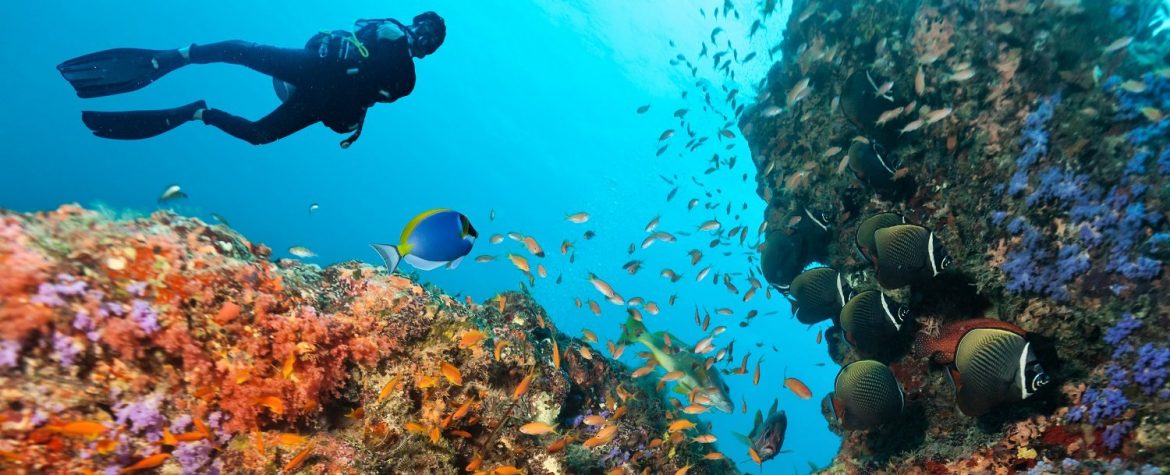
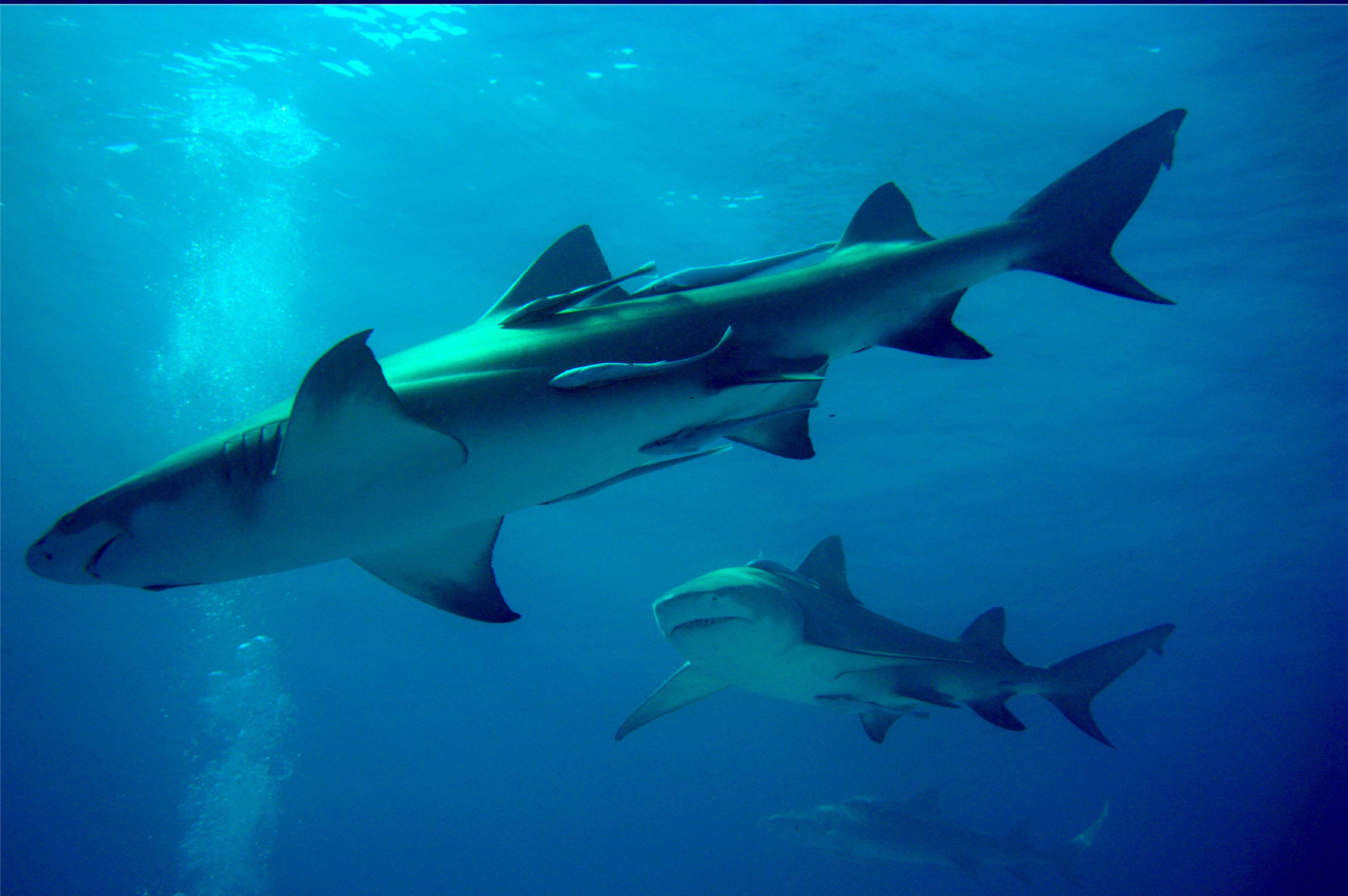
The North Wall, which runs parallel to the north shore, plunges dramatically from around 40ft down many thousands of feet, just a hundred yards or so from shore. There are great wall dives all along the north shore of Grand Cayman with coral gardens at the top of the wall, convenient for safety or decompression stops following a deep dive. There is an abundance of healthy hard and soft corals, including black coral, plenty of overhangs and swim throughs on the wall and always a chance of seeing some pelagic fish out in the blue. Conditions here are best during the summer when seas are calm and you will have a greater chance of seeing schools of spotted eagle rays and perhaps sharks.
WEST SIDE
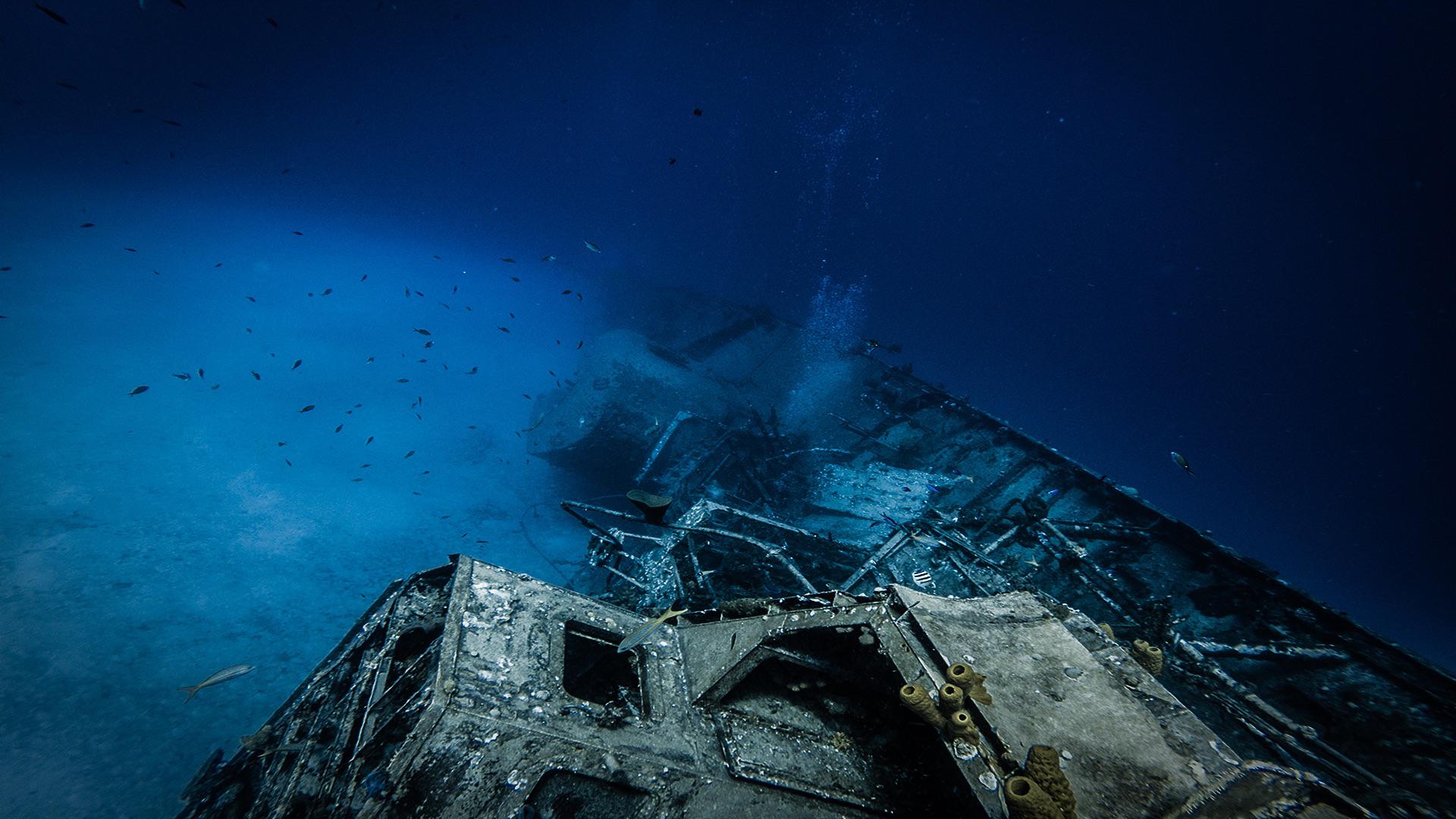
The reefs and walls off the west coast, from North West Point to George Town are the most frequently dived sites, as this the leeward shore so conditions are favourable for diving year–round. All the wreck dives are in this area, including the Wreck of the Oro Verde, Doc Poulson and the Kittiwake. There are also some outstanding wall and reef dives, as well as a number of accessible shore dives including Turtle Reef, Eden Rock and Devil’s Grotto. From April to September look out for huge schools of tiny silversides hiding in caves, and the resident tarpon and grouper who feast on them.
SOUTH SIDE
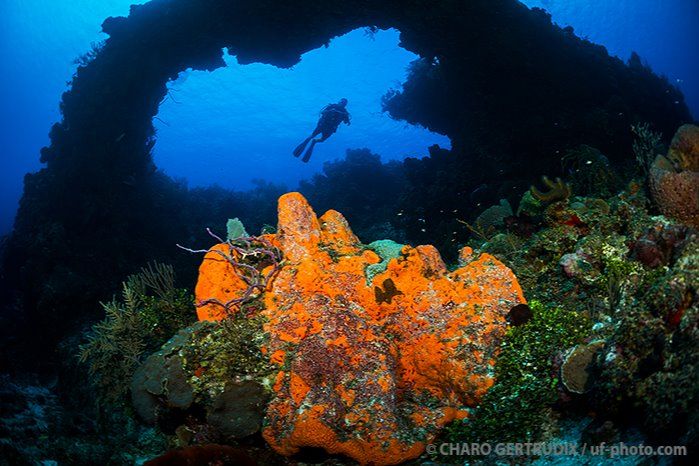
The dive sites along the south coast are most often dived during the winter, as they remain calm during nor’westers. The drop offs on the southern side typically start at greater depths than in other areas and there are some spectacular canyons, coral encrusted arches, swim–throughs and caves in this area.
EAST END
Here you will find the most remote and unspoilt diving on Grand Cayman. Significantly fewer divers come out this far, and with 55 dive sites to choose from in this district, you can easily escape the crowds. A good mix of walls, with drops offs starting at around 45ft, and shallower reefs with soaring pinnacles and canyons can be found in this area. There is good chance of seeing sharks and millions of silversides gather in caves and under overhangs during the summer.
SISTER ISLANDS
Perhaps best known for the wreck of the Capt. Keith Tibbetts, a 300ft Russian warship, Cayman Brac also has some superb reef and wall dives and visibility typically exceeds 100ft. Diving here is uncrowded with just one dive operator on the island.
Little Cayman offers possibly the best diving in the Caribbean, with pristine corals, abundant marine life and outstanding visibility. The jewel in Little Cayman’s crown is without doubt the legendary Bloody Bay Wall, rated by the likes of Jacques Cousteau and David Doubilet as one of the most dramatic wall dives in the world. It has a perfect vertical drop–off starting at less than 20ft and descends to around 3,000ft with pristine corals and superb visibility.